

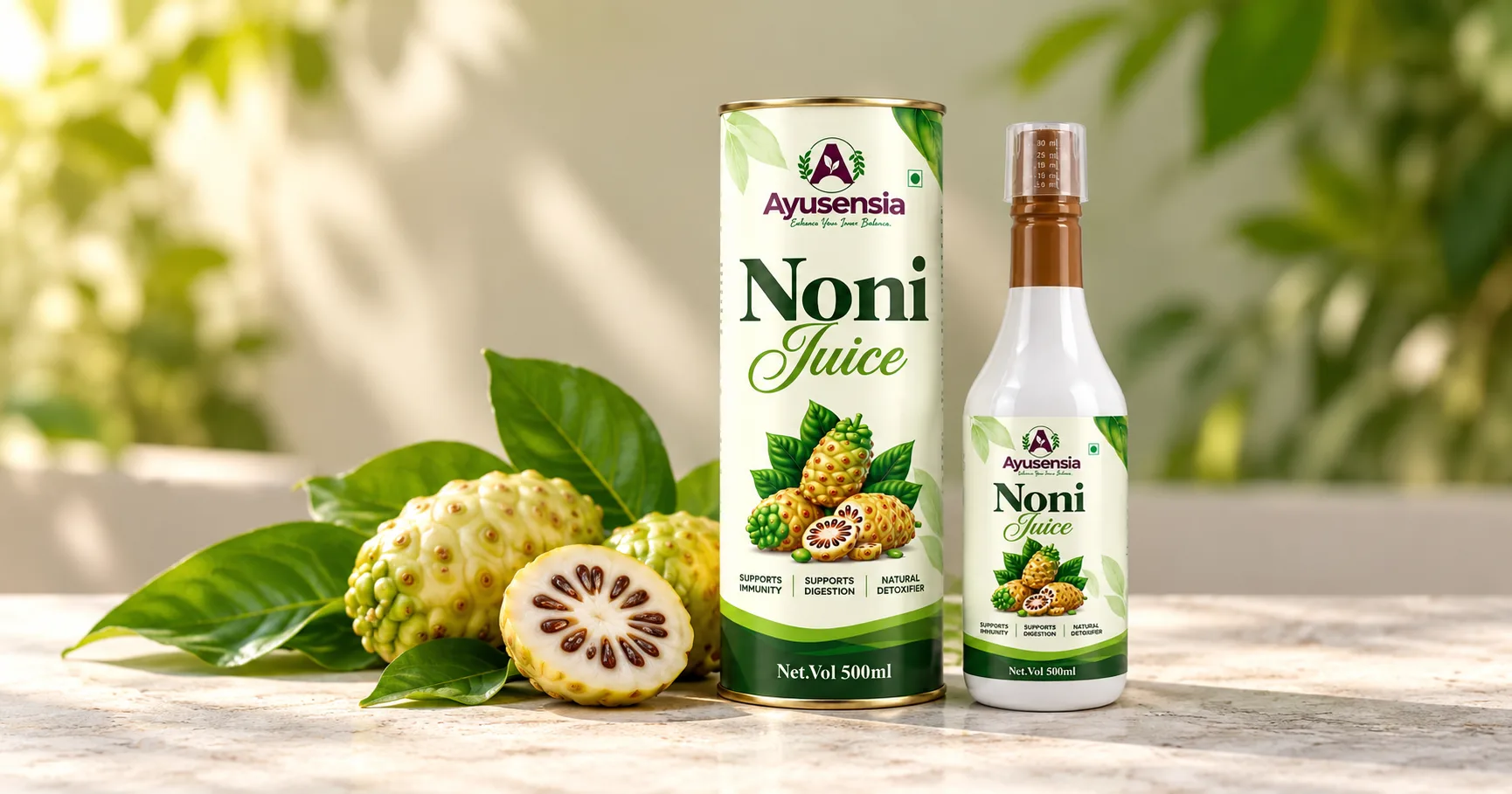
If you are searching for noni juice benefits, most of what you will find is a numbered list of promises. This page covers what noni is, what the research has and has not shown, what is in the bottle, how to take it and who should leave it alone.
In short: noni juice benefits rest on traditional use and plant compounds, not proof. No human study has shown a benefit for any condition. It is high in potassium and is not for pregnancy, kidney disease or liver disease. Take it at the label dose.
What is noni?
Noni is the fruit of Morinda citrifolia, a small tree of the coffee family that grows across Southeast Asia and the Pacific islands. The whole plant has a place in Polynesian and Southeast Asian traditional medicine, and the ripe fruit is the part pressed or fermented into juice. The fruit smells strong and the juice is sharp and bitter, which is why it is diluted with water and why blends add fruit such as apple.
What has research shown about noni juice?
People describe noni juice benefits in general terms, and traditional use across the Pacific covers most everyday complaints. What researchers measure is narrower: the fruit’s plant compounds (mainly iridoids and scopoletin) and its nutrients, which include potassium and some vitamin C. A 2018 review in the journal Foods gathered the human trials, which were small and short and measured blood markers over a few weeks.
The NIH’s National Center for Complementary and Integrative Health states that noni has not been shown to have beneficial effects on any health condition in studies of people. Ayusensia makes no such claim for this product. It is a food supplement taken for its traditional place in a daily routine, at the label dose, for a course of a few weeks.
What is inside Ayusensia Noni Juice?
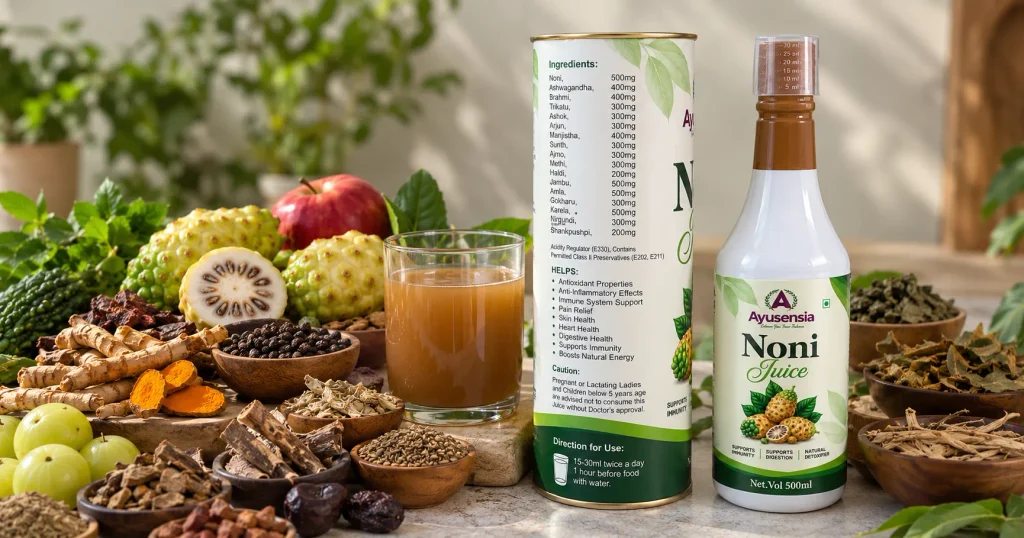
Ayusensia Noni Juice is a noni-first herbal blend, not a plain fruit juice, and the full label is on the Ayusensia Noni Juice product page.
Ingredients: noni, ashwagandha, brahmi, trikatu, ashok, arjun, manjistha, sunth, ajmo, methi, haldi, jambu, amla, gokharu, karela, nirgundi, apple, shankhpushpi. Also declared: acidity regulator (E330) and permitted Class II preservatives (E202, E211). Sugar free.
Benefits
Ayusensia describes this product by what it is, not by what it promises, so the noni juice benefits on this page are the ones the label supports.
Noni first. Noni is the first ingredient on the panel, followed by seventeen ayurvedic herbs and fruits.
Naturally rich in plant compounds. Noni fruit contains iridoids and scopoletin, the compounds researchers study, with potassium and some vitamin C.
Sugar free. No sugar and no sweetener on the label.
A measured dose. The cap measures 15 to 30 ml, so every dose is the same.
A traditional fruit for a daily routine. Taken as a course of a few weeks, one hour before food, with water.
Supports everyday wellbeing in the traditional sense, and nothing more. No disease claim, no treatment claim.
This product is not intended to diagnose, treat, cure or prevent any disease.
How to use
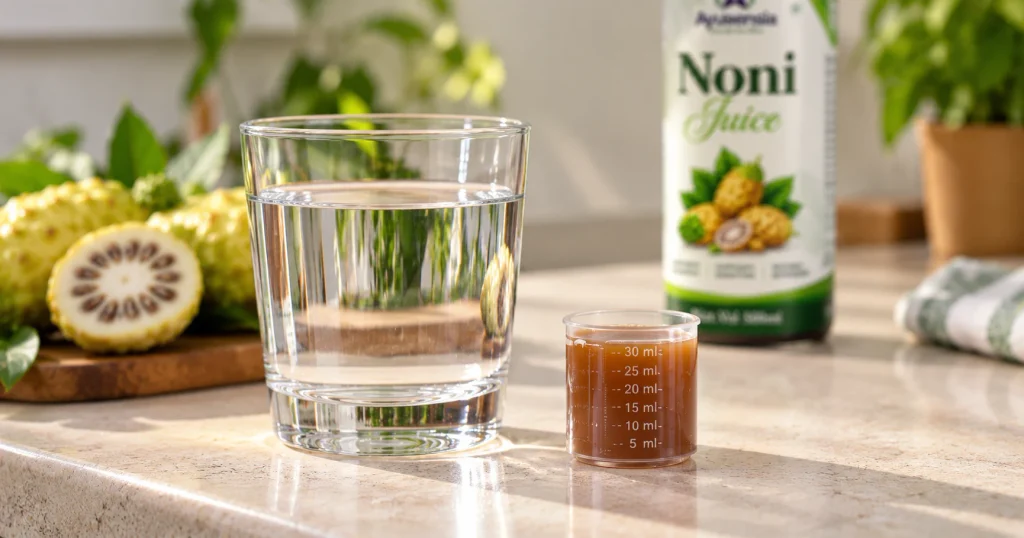
Take 15 to 30 ml twice a day, one hour before food, with water, as the label directs. Fill the measuring cap to the line, pour it into a glass of water and drink; the dilution is for the taste. A 500 ml pack lasts between eight and sixteen days at that dose.
Noni juice benefits, if any, arrive slowly, so take it as a course of a few weeks, not a habit. The NCCIH notes that noni juice may be safe for up to three months and that longer use has not been studied, so get a doctor’s view before month four. The timeline for any supplement is covered in how long ayurvedic supplements take to show results.
Before you take it
Noni is high in potassium, which matters for anyone with kidney disease or on medicines that raise potassium, including some blood pressure medicines. Several cases of liver injury have been reported in people who drank noni juice or tea for weeks, though it is not established that noni caused them. The NCCIH lists liver-affecting medicines among the ones not to combine with it.
The blend adds its own cautions, and no list of noni juice benefits is complete without them. Karela, methi and jambu are herbs studied for their effect on blood sugar, so anyone on diabetes medicine asks a doctor first; arjun and the potassium sit with blood pressure medicines, and ashwagandha sits with thyroid medicine and sedatives. Our post on ashwagandha benefits for women covers who should avoid that herb.
Side effects for most people are mild: an upset stomach or nausea, more often at higher doses. Stop and see a doctor if you notice yellowing eyes, dark urine or unusual tiredness. Store in a cool, dry place away from direct sunlight, as the label says.
Who is it for, and who should avoid it?
It is for adults who want noni in a measured daily dose without sugar and who are not in any of the groups below. Pregnant women, breastfeeding mothers, anyone with kidney disease or a potassium limit, anyone with liver disease and children under five should not take it. Anyone on the medicines listed under How to use asks a doctor first.
Weight loss, diabetes, joint pain, liver problems and skin conditions are reasons many people search for noni juice benefits. This product treats none of them and makes no claim about them. A doctor can test for the cause and a juice cannot, and the checks that apply to any supplement are in how to choose ayurvedic supplements you can trust.
Caution as printed on the label: pregnant or lactating women and children below five years are advised not to consume this juice without a doctor’s approval. Ayusensia’s quality standards are set out on our commitment to quality page.
Frequently asked questions
Is Ayusensia Noni Juice pure noni juice?
No. It is a noni-first blend of eighteen ingredients, listed on the panel in label order with an acidity regulator and two preservatives declared. Pure noni juice is a different product, and the ingredients panel is how you tell the two apart.
Is Ayusensia Noni Juice sugar free?
The label says sugar free and lists no sweetener. It declares an acidity regulator (E330) and two Class II preservatives (E202 and E211), so anyone avoiding those checks the panel. Sugar free says nothing about interactions; the How to use section still applies.
How much does it cost, and how long does a pack last?
The current price is on the Ayusensia Noni Juice product page and includes all taxes. At the label dose of 15 to 30 ml twice a day, a 500 ml pack of Ayusensia Noni Juice lasts between eight and sixteen days.
What does noni juice taste like?
Sharp, bitter and strong-smelling, which is why the label says take it with water and why this blend includes apple. Taste says nothing about noni juice benefits or quality, so judge any bottle by its ingredients panel.
Can I take it every day?
The label allows Ayusensia Noni Juice daily at 15 to 30 ml twice a day, for a set number of weeks. The NCCIH notes noni juice may be safe for up to three months, and longer use is unstudied, so get a doctor’s view before month four.
Can I take it with my medicines?
Ask your doctor first if you take diabetes, blood pressure, thyroid, sedative, potassium-raising or liver-affecting medicines. Ayusensia Noni Juice contains karela, methi, jambu, arjun and ashwagandha as well as noni. Each of those sits with one of the medicines above.
Is it safe in pregnancy or while breastfeeding?
No. Traditional use of noni includes ending pregnancies, so every reference says avoid it. Breastfeeding has too little safety data, and the Ayusensia Noni Juice label says the same for both, along with children under five.
How should I store it?
The label says store Ayusensia Noni Juice in a cool, dry place and protect it from direct sunlight. The batch number, manufacturing date and expiry date are printed on the pack. Do not use it past the expiry.
Disclaimer: this page is general wellness information, not medical advice. Ayusensia Noni Juice is a food supplement and is not intended to diagnose, treat, cure or prevent any disease. Individual results vary. If you are pregnant or breastfeeding, take medication or manage a health condition, consult your doctor before use.