

If you are looking up ashwagandha benefits for women, most of what you will find promises hormone fixes no supplement can deliver. This article covers what the herb supports, how much to take, the side effects and who should avoid it. It also says plainly which concerns belong with a doctor.
In short: the main ashwagandha benefits for women are support for the stress response, restful sleep and steady focus, from a daily food supplement taken over weeks. It is not a medicine and it is not advised in pregnancy or breastfeeding.
What is ashwagandha and why do women take it?
Ashwagandha (Withania somnifera) is a small shrub whose root has been used in Ayurveda for centuries as a rasayana, a rejuvenating tonic. It is an adaptogen, a herb used to help the body cope with stress rather than to stimulate or sedate it. The root’s active compounds are called withanolides, and a standardised root extract such as KSM-66 keeps each capsule consistent.
Ashwagandha is usually marketed to men, with shatavari benefits for women as the usual pairing, but the plant is not gender-specific. Ayusensia lists its capsules for men and women, and the ashwagandha benefits for women and for men come from the same root: stress, sleep and focus.
What are the ashwagandha benefits for women?
The ashwagandha benefits for women with the most support behind them are three: a steadier stress response, more restful sleep and clearer focus through the day. These are everyday supports and none of them replaces a doctor.
Supports the stress response
Stress support is the best-known of the ashwagandha benefits for women and the most studied. The herb has been examined for its effect on the stress hormone cortisol, and small clinical trials have measured how adults taking a standardised root extract rate their stress. The NIH Office of Dietary Supplements notes that most of the studies point the same way while the evidence base is still limited.
Supports restful sleep
Sleep is the second of the ashwagandha benefits for women with research behind it, and the herb is traditionally taken at night with warm milk. Small trials have looked at sleep quality and how rested people feel, with the clearest results in people who sleep badly. It is not a sedative.
Instead, it may support deeper, more restful sleep as a wound-up nervous system settles. A better night feeds the next day.
Supports steady focus and mood through the day
Because it supports stress and sleep, ashwagandha is also linked with steadier mood and clearer focus. This is a gradual, cumulative change that shows up only with consistent daily use. It may appear as fewer afternoon low points and a longer fuse under pressure.
How much ashwagandha should a woman take?

The Ayusensia label is one 600 mg capsule of KSM-66 root extract a day, and the label wins over any number in a blog. Most pages listing ashwagandha benefits for women skip the dose entirely. In the studies summarised by the NIH Office of Dietary Supplements, daily doses of standardised extract varied widely and several used 500 to 600 mg a day.
Take it after food if it feels heavy, or at night with warm milk in the traditional way. Adaptogens work over weeks, so consistency matters more than dose size. For a realistic timeline, see how long ayurvedic supplements take to show results.
What are the side effects of ashwagandha for women?
No list of ashwagandha benefits for women is complete without the side effects. The herb is usually well tolerated by females and males alike, but well tolerated is not the same as right for everyone.
The common side effects are mild: an upset stomach, loose stools, nausea or daytime drowsiness. They show up more often at higher doses, and starting low usually settles them. Ashwagandha belongs to the nightshade family, so anyone allergic to those plants should avoid it.
A few rarer cautions matter more. Rare reports have linked ashwagandha supplements to liver injury, and it may raise thyroid hormone levels, so it needs care if you have a thyroid condition or take thyroid medicine. It can also add to the effect of sedatives and may interact with blood sugar medicine, blood pressure medicine and immunosuppressants.
Check with your doctor if you take any of these, if you have an autoimmune condition or if you have surgery coming up. Long-term safety beyond about three months has not been well studied.
If you feel persistently tired, see a doctor first. Low iron and thyroid problems are common in women, and both need a blood test.
Who should avoid ashwagandha?
Women who are pregnant, breastfeeding or planning a pregnancy should avoid ashwagandha. So should anyone with a thyroid, liver or autoimmune condition unless a doctor agrees.
Pregnancy is the firmest of these. The NIH Office of Dietary Supplements says ashwagandha may be unsafe in pregnancy, and some evidence links it to a higher risk of miscarriage. For breastfeeding there is not enough safety information, so avoid it.
If you are trying to conceive, ask your doctor before starting or continuing it. Anyone on the medicines listed above, or with surgery scheduled, should talk to a doctor first.
Which concerns should go to a doctor rather than a supplement?
Irregular or painful periods, PCOS symptoms, thyroid symptoms, trying to conceive and persistent tiredness or low mood belong with a doctor. Ashwagandha is not a treatment for any of them.
Many pages on ashwagandha benefits for women promise otherwise, and this article makes no claim about these conditions. A doctor can test for the causes and a supplement cannot. If one of these is why you searched, see the doctor first.
Ashwagandha at Ayusensia
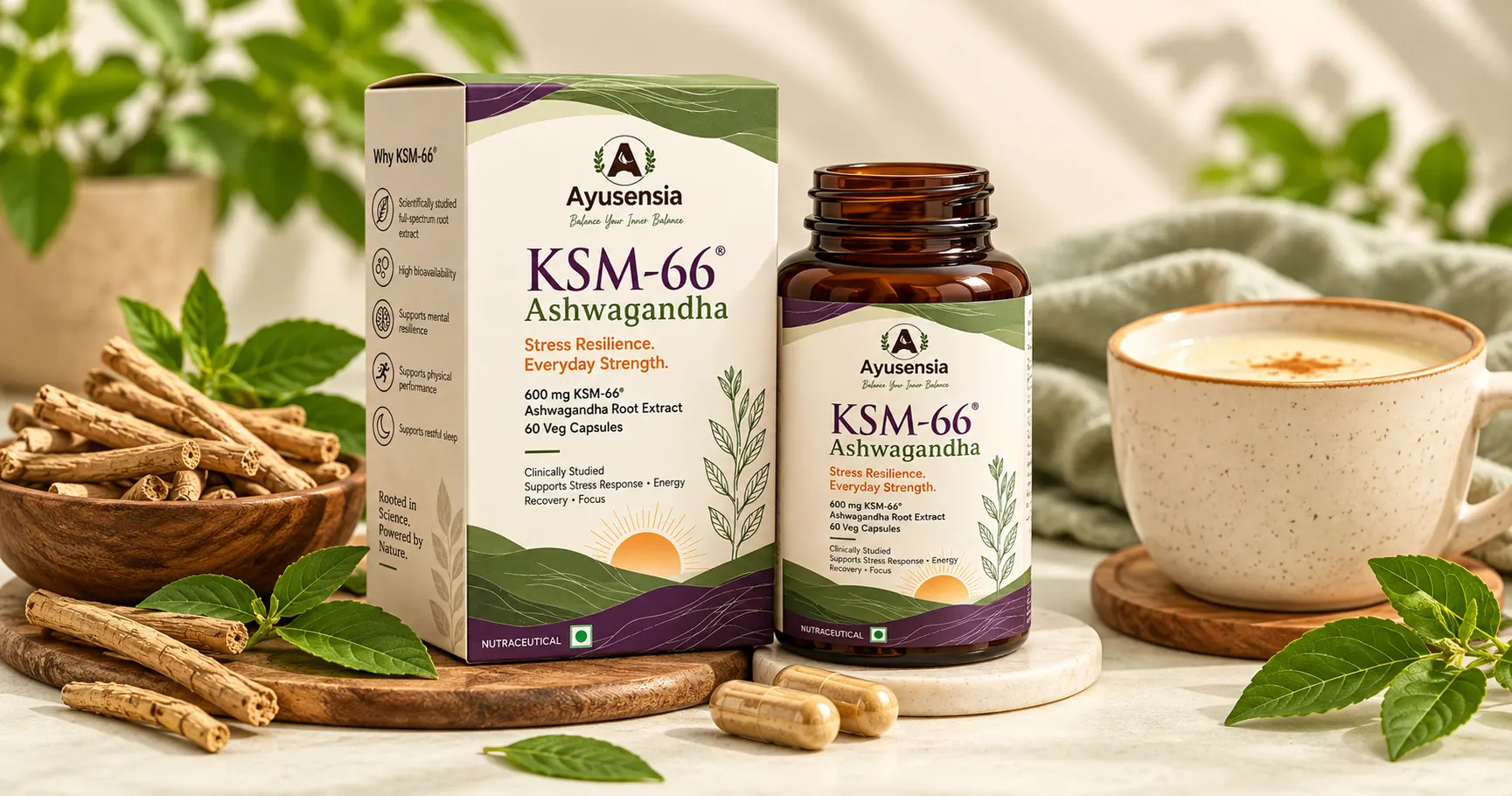
Ayusensia KSM-66 Ashwagandha capsules give 600 mg of KSM-66 full-spectrum ashwagandha root extract in each vegetarian HPMC capsule, with 60 capsules per pack, taken as one capsule a day. They are non-GMO, gluten free and made with no added preservatives.
The product page lists them for men and women. If you are still deciding, our guide on how to choose ayurvedic supplements you can trust covers licences, labels and testing.
Frequently asked questions
Can women take ashwagandha every day?
Daily use is how any ashwagandha benefits for women build up, and the Ayusensia label is one capsule a day. Long-term safety beyond about three months has not been well studied, so follow the label and check with a doctor if you take any medicine.
Should I stop ashwagandha if I am trying to conceive?
Ask your doctor before continuing ashwagandha while you plan a pregnancy. It is not advised in pregnancy and some evidence links it to miscarriage risk. It is not a fertility aid, so pause it until you have had that conversation.
Does ashwagandha affect thyroid test results?
Ashwagandha may raise thyroid hormone levels in some people, so it can affect a thyroid test. Tell your doctor you take it before any thyroid test, and do not start it without advice if you take thyroid medicine.
What time of day should women take ashwagandha?
The Ayusensia label says one capsule a day and does not fix a time. Traditional use is at night with warm milk, and after food is easier on the stomach. Taking ashwagandha at the same time every day matters more than the time itself.
Is ashwagandha powder or a capsule better for women?
Powder and capsules carry the same herb, so the ashwagandha benefits for women do not depend on the format. Powder is traditional with a flexible dose and needs preparing, while a capsule gives a fixed, standardised amount. Choose the one you will take consistently.
The bottom line
The ashwagandha benefits for women worth taking seriously are support for stress, sleep and focus. They build slowly with daily use, so choose a standardised product and give it a few weeks.
Speak to your doctor first if you take medicine or manage a condition, and skip it in pregnancy and while breastfeeding. For the wider range, read our guide to ayurvedic supplements for women.
Disclaimer: this article is general wellness information, not medical advice. Ashwagandha is a food supplement and is not intended to diagnose, treat, cure or prevent any disease. Individual results vary. If you are pregnant or breastfeeding, take medication or manage a health condition, consult your doctor before use.