

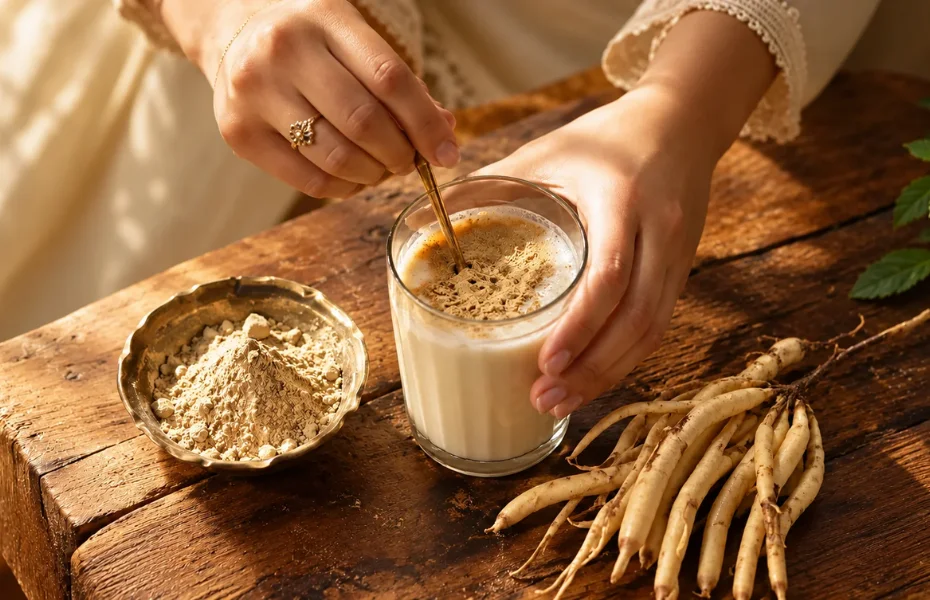
Ask your nani or dadi about shatavari benefits for women, and you will get an answer within the first minute. This herb has been in Indian kitchens and vaidya prescriptions for roughly three thousand years, long before anyone used words like adaptogen or hormonal wellness. And it is having a moment again, because a generation of Indian women juggling work, family and very little sleep is looking for support that does not come in a strip of tablets.
So what does shatavari actually do, how much should you take, and who should stay away from it? Here is the full picture, minus the marketing noise.
What Is Shatavari?
Shatavari (Asparagus racemosus) is a climbing plant from the asparagus family whose roots have been used in Ayurveda for centuries as the primary rasayana, or rejuvenating tonic, for women. It grows wild across much of India, and it is the root, not the leaf or berry, that carries the active compounds.
Those compounds have names worth knowing if you read labels. The roots are rich in steroidal saponins called shatavarins, along with flavonoids, polyphenols and mucilage. Modern reviews of the plant’s phytochemistry and pharmacology have catalogued these constituents in detail, which is part of why the herb keeps showing up in research despite its very old reputation.
In Ayurvedic texts it is classed as a cooling, nourishing herb, and its Sanskrit name is usually translated as “she who possesses a hundred husbands”. Poetic, slightly cheeky, and a fair hint at where its traditional reputation lies. Ayurveda calls it the queen of herbs for women. Ashwagandha, by comparison, is often called the herb for men, though both are used by everyone.
7 Shatavari Benefits for Women
Here is what shatavari is traditionally used for, and what the research is currently looking at. A note before we start: these are wellness supports, not cures. Nothing here replaces a doctor.
1. Support through every life stage
This is shatavari’s headline use. Ayurveda uses it from a girl’s first period right through to menopause, adapting the dose and the pairing herbs at each stage. Modern research has begun testing that traditional use, and a 2024 randomised controlled trial published in Cureus examined shatavari root extract in women experiencing menopausal symptoms. The evidence base is still young and more trials are needed, but it is encouraging to see a three-thousand-year-old practice being studied properly rather than just repeated.
2. Monthly comfort and balance
Many Indian women take shatavari through the month specifically for cycle-time comfort. In Ayurveda it is grouped with cooling, soothing herbs, which is why it is often combined with ashoka and lodhra, two other classical women’s herbs, rather than used alone. If your cycle is genuinely irregular or painful, please see a gynaecologist first. A herb is a support, not a diagnosis.
3. Stress support, the adaptogen effect
Shatavari is classed as an adaptogen, meaning it is traditionally used to help the body cope with stress rather than to sedate it. This matters more than it sounds. Stress is not just a mood problem, it affects sleep, appetite, skin and energy, and for most working women it is the one factor running quietly underneath everything else. Adaptogens are studied for exactly this: helping the body hold steady when life will not.
Ayurveda paired this understanding with something modern wellness is only now catching up to. It never treated the mind and the cycle as separate systems. A stressed body and a body out of rhythm were the same conversation, approached with cooling, nourishing herbs and a settled routine rather than one targeted fix.
4. Everyday energy and vitality
Not the jittery kind that coffee gives you at 4 pm. The traditional claim is steadier: better stamina across a long day, less of that 3 o’clock crash. If you are commuting, working, running a home and sleeping six hours, this is usually the benefit women notice first and value most.
Worth being clear about what this is not. Shatavari is not a stimulant and it will not paper over genuine exhaustion. If you are tired all the time, get your haemoglobin, thyroid and vitamin D checked, because iron deficiency is remarkably common among Indian women and no herb substitutes for treating it. Shatavari supports an already reasonably rested body. It cannot replace the rest.
5. Support for new mothers
Shatavari has a long history as a galactagogue in India, and it is listed for this use in the official Ayurvedic pharmacopoeia. The US National Institutes of Health’s LactMed database reviews the clinical evidence and reports the results as mixed overall, though one small well-conducted study found higher prolactin levels and infant weight gain compared with placebo. That is an honest summary: promising, not proven. And critically, if you are pregnant or breastfeeding, talk to your doctor before taking shatavari or any supplement. The product label says the same thing for good reason.
6. Digestive comfort
The mucilage content is why shatavari is traditionally used to soothe the gut lining. Ayurveda has prescribed it for acidity and general digestive irritation for centuries, and it is one of the gentler herbs in that category, which is why it suits daily use.
7. Skin, hair and healthy ageing
The antioxidant angle. Shatavari’s polyphenols and flavonoids are studied for their role in helping the body manage oxidative stress, the process that quietly drives visible ageing. Ayurveda always treated skin as an output of internal balance rather than something to be fixed only from the outside, and shatavari sits in that logic. Sleep, water, digestion and stress show up on your face long before any serum does, which is why the classical texts kept prescribing tonics rather than topicals.
Shatavari Powder vs Capsules: Which Is Better?
Neither one is stronger. Powder is the traditional format and gives you flexibility in dosing; capsules give you exact, consistent amounts with no taste and no measuring. The right answer depends on whether you will actually take it every day.
| Shatavari powder | Shatavari capsules | |
| Taste | Bitter-sweet, needs milk or honey | None |
| Dosing | Approximate, by spoon | Exact, printed on label |
| Convenience | Needs preparation time | Travel and office friendly |
| Tradition | Classical method, taken with warm milk | Modern format |
Here is the honest bit nobody selling powder will tell you. The taste is the single biggest reason people stop taking shatavari in week two. If you enjoy the ritual of warm milk at night, powder is lovely and genuinely traditional. If you know yourself and you know that jar will sit unopened behind the atta dabba, buy shatavari capsules instead. The best format is the one you will still be taking in month three, because consistency is where all the benefit lives.
Shatavari Dosage: How Much and When
Traditional practice commonly uses one to two teaspoons of shatavari powder daily, usually split across the day and taken with warm milk or water. Capsule products vary, so the number on your label always wins over any number on a blog, including this one.
On timing, most people take it after meals to avoid any digestive heaviness. Powder with warm milk at night suits the traditional cooling, calming use. Capsules after breakfast are simply easier to remember, and a supplement you remember beats a supplement you optimise.
Give it time. Adaptogens and nourishing herbs work gradually, over weeks rather than days, and anyone promising you an overnight change is selling something. Individual results vary, and consistency matters far more than dose size.
Shatavari Side Effects and Who Should Avoid It
Shatavari is generally well tolerated, which is a big part of why it has survived three thousand years of daily use. But well tolerated is not the same as suitable for everyone.
- Possible mild effects: some people report digestive heaviness or loose motions when starting, particularly at higher doses. Starting low usually settles it.
- Allergy caution: if you are allergic to asparagus, avoid it. Same plant family.
- Pregnancy and breastfeeding: consult your doctor first. Non-negotiable, regardless of traditional use.
- On medication: if you take diuretics, lithium, or medication for any ongoing condition, check with your doctor before adding shatavari, as herbs can interact.
- Existing conditions: hormone-sensitive conditions, thyroid disorders or anything under active treatment need a doctor’s opinion first, not a blog’s.
None of this is meant to frighten you off. It is simply what an honest guide includes and a sales page leaves out.
Shatavari in Ayusensia Women Shakti Moringa
Ayusensia Wellness includes Shatavari Root Extract 100 mg per capsule in Women Shakti Moringa, a 60-capsule vegetarian formulation taken as two capsules a day. The extract is standardised to 20% saponins, and that detail is worth more than the milligram figure on its own. Standardisation tells you how much of the active compound is actually in there. Plenty of herbal products list an impressive number and never mention what percentage of it does anything.
Alongside the shatavari sit Moringa Leaf Powder 300 mg, iron 14 mg as ferrous bisglycinate, and vitamin C 40 mg. That last pairing is not decoration. Ferrous bisglycinate is a chelated form of iron, generally easier on the stomach than the conventional iron salts that put so many women off supplements altogether, and vitamin C supports the absorption of iron. Given how often tiredness in Indian women traces back to low iron, as mentioned earlier in this guide, a women’s formula that includes it rather than ignoring it is a sensible piece of design.
The capsules use a vegetarian HPMC shell and are GMP certified, with no artificial colours or preservatives. You can read how the brand handles sourcing and testing on its Commitment to Quality page.
If shatavari is not the only thing you are looking for, Ayusensia’s women’s range also includes BloomBalance and the 23-nutrient Women Shakti Multi multivitamin for everyday nutrition.
Frequently Asked Questions
What are the main shatavari benefits for women?
Shatavari is traditionally used to support hormonal wellness across life stages, monthly comfort, stress resilience, everyday energy, lactation in new mothers, digestive comfort and skin health. It is classed as an adaptogen and a rasayana, meaning it is used for gradual nourishment rather than quick effects.
What is the best time to take shatavari?
Most people take shatavari after meals. Powder is traditionally taken with warm milk at night, which suits its cooling, calming reputation, while capsules are commonly taken after breakfast for convenience. The best time is the one you will stick to daily.
Shatavari ke fayde kya hain?
Shatavari is used in Ayurveda mainly for women’s wellness. Traditional uses include support for hormonal balance, monthly comfort, energy and stamina, milk production in new mothers, digestion and skin health. It is a nourishing tonic taken regularly, not a quick remedy, and results build over weeks.
Can I take shatavari every day?
Yes, shatavari is traditionally taken daily and is generally well tolerated for regular use. Follow the dose on your product label, do not exceed it, and check with a healthcare professional if you are pregnant, breastfeeding, on medication or managing any medical condition.
Is shatavari powder or capsule better?
Both deliver the same herb. Powder is traditional and flexible but bitter and needs preparation. Capsules give exact dosing with no taste and travel easily. Choose based on which one you will realistically take every day, because consistency matters more than format.
Is shatavari safe for young women and during periods?
Shatavari is traditionally used by women of all ages, including during menstruation, and is generally considered gentle. That said, teenagers, anyone with a diagnosed condition, and anyone on medication should speak to a doctor before starting any supplement.
The Bottom Line
Shatavari has earned its place. The shatavari benefits for women are real in the sense that three thousand years of traditional use and a growing research base both point in the same direction, and honest in the sense that it supports your body gradually rather than fixing anything overnight.
Pick the format you will actually stick with, take it consistently, give it a couple of months, and talk to your doctor if you are pregnant, breastfeeding or on medication. That is the whole method. Curious about a ready-made blend? Shatavari is one of the herbs in Women Shakti Moringa, part of the Ayusensia women’s range.