
Here is an odd truth about multivitamins. Half the people taking one never asked whether they need it, and half the people who might actually benefit have never considered it. The bottle just arrives in the house one day and becomes a habit.
So let us ask the question properly. One can be a sensible addition to some routines and an unnecessary expense in others, and the difference is not complicated. This guide covers what one is, how it differs from a regular multivitamin, who tends to benefit and who can happily skip it.
In short: an ayurvedic multivitamin is a daily supplement that combines vitamins and minerals with traditional herbal sources like amla and moringa. It can help cover everyday gaps in a busy or repetitive diet, but not everyone needs one, and it never replaces real food.
What is an ayurvedic multivitamin?
An ayurvedic multivitamin is a daily blend of vitamins and minerals built around traditional herbal sources rather than isolated nutrients alone. Instead of only synthetic vitamin C, for example, it may draw on amla, one of the richest traditional sources of it. Moringa often appears for its naturally occurring minerals.
In India these products are sold as nutraceuticals under an FSSAI licence, and that licence number should be printed on the pack. Beyond that, it is still a supplement like any other. The word ayurvedic describes where the ingredients come from, not a special category of promise.
How is it different from a regular multivitamin?
A regular multivitamin delivers isolated nutrients in measured doses. An ayurvedic one leans on whole-herb sources alongside them, so the same tablet may carry both a measured mineral and a traditional herb.
Is one better? Honestly, neither wins by default. You will find well made and poorly made products in both camps, and the label tells you far more than the word on the front. A clearly listed formula with real quantities beats a vague herbal blend, and it beats an anonymous synthetic one too. Judge the label, not the category.
There is one practical difference worth knowing. Herbal sources bring their own traditional context, amla and moringa have been part of Indian kitchens and routines for generations, so for many people they simply feel like a more familiar way to take daily nutrition. That familiarity is a fair reason to prefer them. It is not a reason to expect more from them.
Who might benefit from an ayurvedic multivitamin?
Nobody can tell you from a distance that you need a supplement. What we can describe honestly is where one tends to earn its place.
People with rushed, repetitive diets
If your week runs on the same four or five meals, there are likely small gaps a varied diet would normally cover. A daily multivitamin can help fill some of them while you work on the variety itself.
Vegetarians with limited variety
A vegetarian plate can be complete, but a narrow one sometimes runs short on certain nutrients. A multivitamin is support in that situation, not a substitute for widening what you eat.
Women juggling work, family and everything between
Busy stretches are when meals get skipped and repetition creeps in, which is why many women look at daily nutrition support first. Our range of ayurvedic supplements for women is built around that everyday reality, and traditional herbs like shatavari benefits for women have their own long history in women’s wellness.
People easing back into a routine
After travel, illness recovery guided by your doctor, or simply a chaotic month, a daily multivitamin can be one small part of rebuilding a steady rhythm. The rhythm does the real work.
Who does not need a multivitamin?
This is the part most articles skip, so let us be plain.
If you already eat a varied, balanced diet, a multivitamin adds very little. If you are reaching for one to fix persistent tiredness, see a doctor first, because ongoing fatigue deserves a proper look, not a supplement. If you are hoping it will make up for poor sleep or skipped meals, it will not. And children, pregnant women and breastfeeding mothers should only take supplements a doctor has specifically advised.
A multivitamin fills small gaps. It does not build the wall. Anyone selling it as more than that is selling.
One more honest test before you buy anything. Ask what gap you are actually trying to fill. If you can name it, a rushed diet, a narrow plate, a chaotic month, a supplement has a job to do. If you cannot name it, the money is usually better spent on the food itself.
How to choose an ayurvedic multivitamin
The same five checks we apply to everything. Look for the licence number on the pack and the product page. Read the full ingredient list with quantities per serving, and walk away from vague blends. Check who actually manufactures it. Ask whether batches are lab tested, you can see how we test and check our products as an example of what that should look like. And trust modest claims over loud ones.
If you want the full version of this checklist, our guide on how to choose ayurvedic supplements you can trust walks through it properly.
Where Ayusensia fits
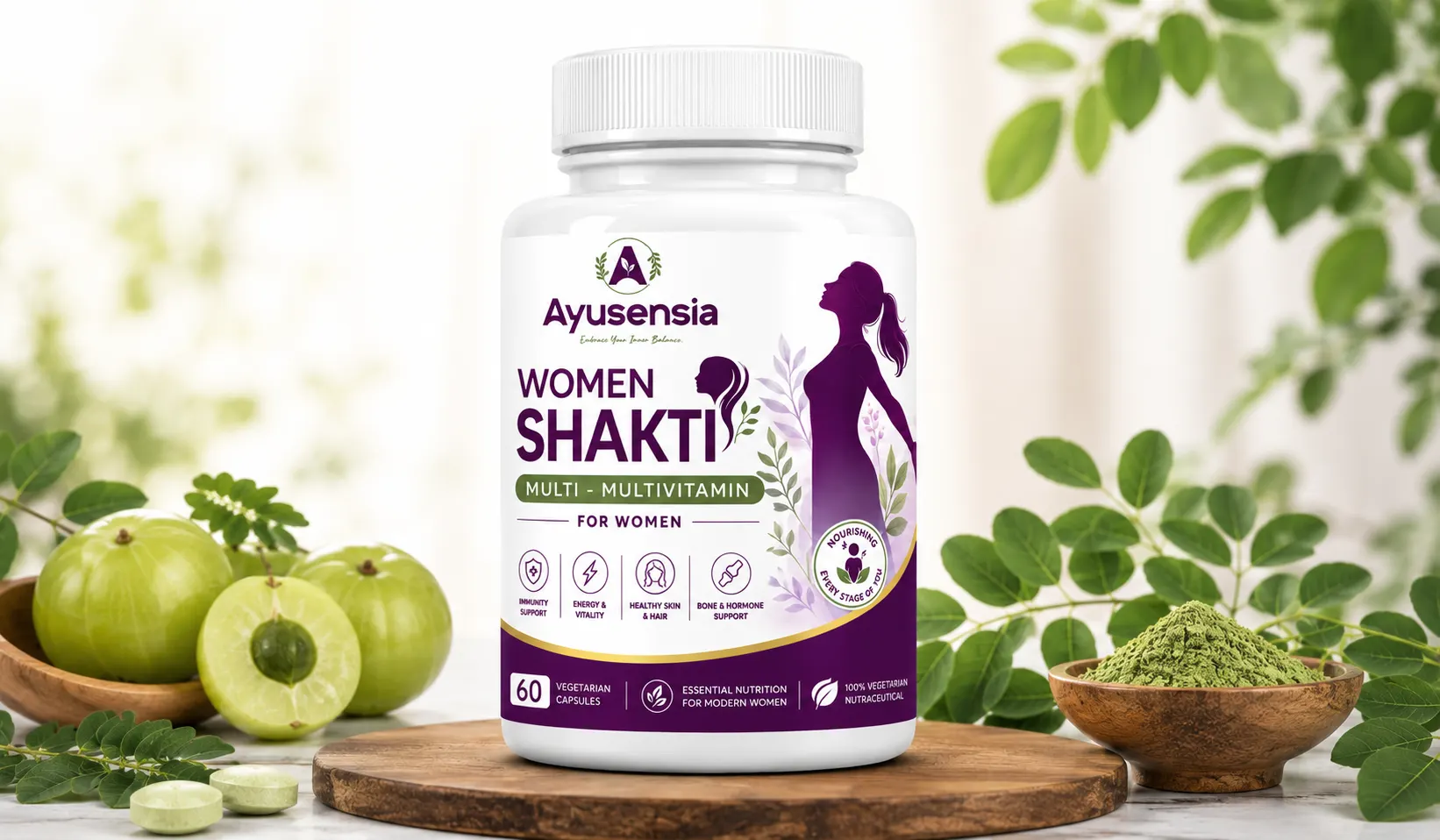
Ayusensia is an Indian ayurvedic wellness brand based in Rajasthan, and our view on multivitamins is the one you have just read: useful for the right person, unnecessary for others, and the label decides the product. For women building everyday nutrition support into their routine, our ayurvedic multivitamin for women, Women Shakti Multi, is made for exactly that, and we would rather you buy it for the right reason than for a promise.
Frequently asked questions
What is an ayurvedic multivitamin?
An ayurvedic multivitamin is a daily supplement that combines vitamins and minerals with traditional herbal sources such as amla and moringa. In India these products are sold as nutraceuticals under an FSSAI licence, and a good one names every ingredient and amount on the label.
Who should take a multivitamin?
People with rushed or repetitive diets, limited food variety or a disrupted routine may find a daily multivitamin helps cover everyday gaps. It supports a reasonable diet rather than replacing one, and anyone unsure should ask their doctor.
Is an ayurvedic multivitamin better than a regular one?
Neither type is automatically better. Ayurvedic multivitamins lean on whole-herb sources while regular ones use isolated nutrients, and quality varies in both. The licence, the full ingredient list and batch testing matter more than the word on the front.
Do multivitamin tablets give you energy?
Not directly. A multivitamin covers nutritional gaps, and feeling steadier over time usually comes from better food, sleep and routine working together. If tiredness is persistent, speak to a doctor rather than relying on a supplement.
Can I take a multivitamin every day?
Most multivitamins are labelled for daily use, and the dose printed on the pack is the one to follow. If you are pregnant, breastfeeding, on medication or managing a health condition, check with your doctor before starting one.
The takeaway
A good multivitamin earns its place when your routine has genuine gaps, and sits unused when your plate is already doing the job. Be honest about which camp you are in, read the label like it matters, and let food, sleep and movement carry the load a tablet never will.
Disclaimer: this article is for general information only and is not medical advice. Ayurvedic supplements support everyday wellness and do not treat, cure or prevent any condition. Speak to your doctor before starting any supplement, especially if you are pregnant, breastfeeding, on medication or managing a health condition.